◆The GC Review
Currency
Collecting US Paper Money
Paper money is the quieter half of the field, and for many collectors that is the appeal. A banknote carries more design, more text, and more history on its face than a coin can, and the US has issued enough distinct types over the years to keep a specialist busy for a lifetime. The logic of value rhymes with coins, but paper has its own vocabulary and its own condition rules.
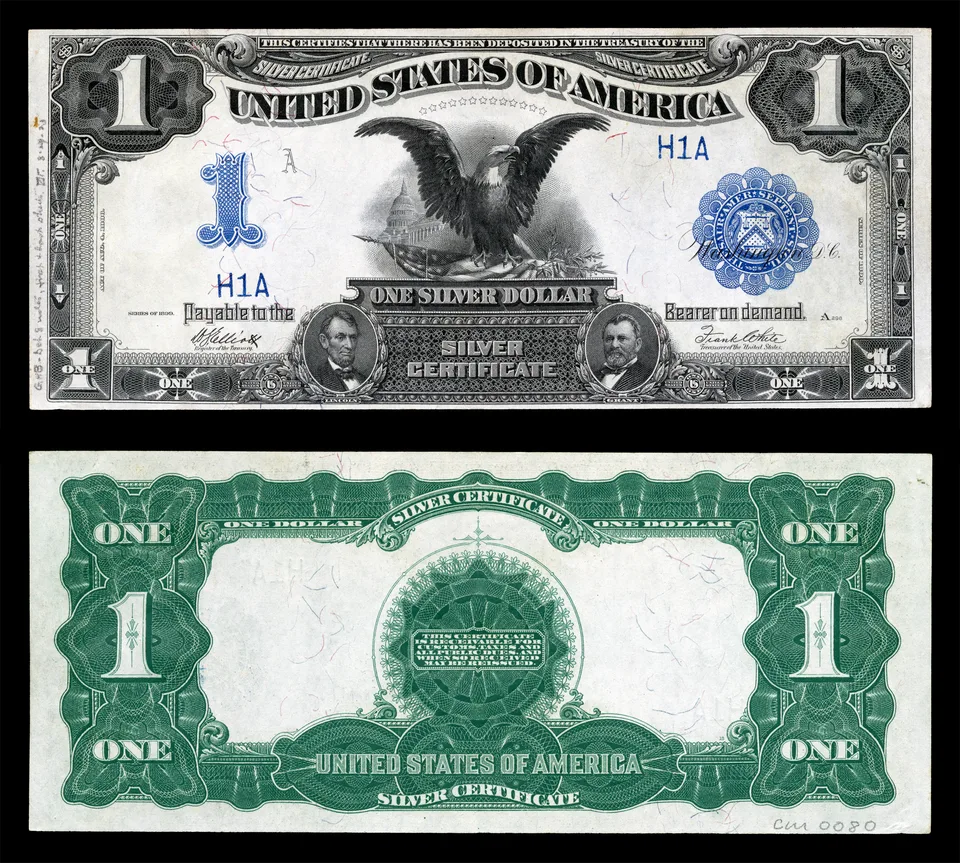
This guide lays out the main types of US notes, the features that make certain notes special, and how grading paper differs from grading metal, so you can read a listing without getting lost.
Large-size and small-size notes
The single biggest dividing line in US paper is physical size. Notes printed into the 1920s are noticeably larger than modern currency and are known as large-size notes. Beginning in the late 1920s the government shrank the format to the dimensions still in use, and everything from that point is small-size. That one distinction sorts most US notes into two broad eras before you look at anything else.
Within each era, notes are further sorted by type: what backed them and what authority issued them. The design changes, the seal colors, and the obligations printed on the face all key back to these types, and collectors often specialize in one era or one type rather than trying to cover the whole span.
Types worth knowing
Several classes of note recur in any discussion of US currency. Silver certificates were once redeemable for silver and are recognizable by their seals and the promise printed across them; they are among the most collected of the older small-size types. United States Notes, gold certificates, Federal Reserve Notes, and National Bank Notes each tell a different chapter of how the country issued money, and each has its own collector following.
National Bank Notes are a favorite for a specific reason: they were issued by thousands of individual chartered banks and carry the name of the issuing town and bank, so collectors chase notes from a particular place. That geographic angle gives paper a personal, local dimension that coins rarely offer.
Star notes and other specialties
When a note was damaged during printing, the Bureau replaced it with a specially marked note that carries a star in its serial number. These star notes were printed in smaller numbers than the regular run, which makes them scarcer and gives collectors a defined hunt within any series. Collectors also chase notes for their serial numbers themselves: low numbers, solid or repeating digits, and other patterns command premiums entirely apart from the type.
Signatures matter too. The combination of officials signing a series, along with the series year and the issuing district, defines exactly which note you hold, and small differences among those variables separate a common note from a scarce one. Reading a note is largely about learning to notice those details.
How paper grading differs
Paper is graded on a numeric idea broadly similar to coins, but the standards are built for the way paper wears rather than the way metal does. Instead of counting contact marks, graders judge crispness, the presence and sharpness of folds, the paper original body and embossing, margins and centering, and whether the note has any tears, stains, pinholes, or repairs. A note that has never been folded, with full original crispness and good margins, sits at the top; heavy folds and soft, limp paper drop it down.
Two words carry a lot of weight in paper: original and problem-free. A note that retains its original surface and has no repairs, trimming, or restoration is worth substantially more than one that has been doctored to look better, even at the same apparent grade. Third-party currency grading exists for paper just as it does for coins, and a certified note carries the same advantage of a settled, independent opinion.
What sets a note apart, and where to price it
Value on paper comes from the same forces as on coins, arranged for the medium: how scarce the type and signature combination is, the grade and originality of the specific note, and how many people collect that area. A common small-size silver certificate in worn condition is inexpensive; a scarce type in gem condition, or a note from a sought-after bank or serial pattern, is another matter entirely.
Because those variables are many, the sensible move for any value question is a current specialized catalog of US paper money, which lists notes by type, series, and grade, checked against recent sold examples. A dedicated reference will get you far closer to reality than a general guess. For how this fits the broader field, return to the coins and currency reference.
Common questions
Are old paper bills worth more than face value?
Some are, many are not. Common types in worn condition often trade near face or a small premium, while scarce types, high grades, star notes, and desirable serial numbers can be worth much more. Type, grade, and originality decide it, not age alone.
What makes a star note special?
A star note is a replacement for a note spoiled during printing, marked by a star in the serial number. Because replacements were printed in smaller quantities, star notes are scarcer than the regular run and are collected as a distinct category within a series.
Should I flatten or repair a creased note?
No. Pressing, trimming, or repairing a note is considered alteration and lowers its value with knowledgeable buyers, because originality is prized. Leave a note as it is and let its true condition be graded honestly rather than trying to improve its look.
Sources
- Banknote identifiers and symbolsU.S. Currency Education Program