◆The GC Review
Coins and currency
Coins and Currency
Most coins ever struck are worth close to their face value, and a smaller share carry a premium that can run to serious money. The gap between those two groups is what this reference is about. A record buyer need not memorize every date and mint mark to see why one 1909 cent trades for pocket change while another, struck the same year, becomes a headline lot. The reasons are consistent, and once you know them the results stop looking random.
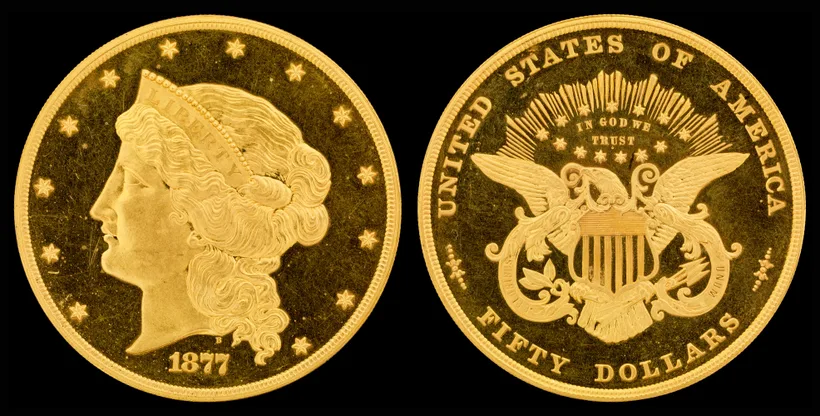
This magazine tracks where prices peak across the collectibles world, so the coin desk here is built around the same instinct: follow the money to the object, then work backward to figure out what made it special. Coins reward that approach because the market is unusually transparent. Grades are numeric, populations are published, and the same pieces resell often enough to leave a paper trail.
The six guides below break the field into the questions that actually decide value.
What lifts a coin above face value
Four things do the heavy lifting, and they only matter in combination. How many were made and how many survive sets the ceiling, and the state of preservation sets where a given example lands beneath it. The number of people chasing the series decides how hard those two push against price. And for gold and silver issues, the metal itself puts a floor under everything. A coin that is scarce but unwanted stays cheap; a coin that is common but flawless rarely breaks out. The full breakdown lives in the guide on what makes a coin valuable.
Series completion is the quiet engine behind a lot of the premiums. Collectors who assemble a date-and-mint run of Lincoln cents or Mercury dimes eventually hit the one issue that was struck in tiny numbers, and everyone building that set needs it. Those bottleneck issues are the key dates, and they carry the story explained in the key-date reference.
Why grading changed the market
Before independent grading, buyer and seller argued over condition on every deal, and a coin called "uncirculated" in one shop was "about uncirculated" in the next. Third-party services ended that argument by sealing coins in tamper-evident holders with a single agreed grade on the label. Two firms dominate, PCGS and NGC, and a coin they have authenticated and graded trades on that label almost like a standardized unit. The mechanics are in the grading walkthrough.
Grading also gave the hobby a shared vocabulary. Coins run on a numeric ladder from 1 to 70, a scale that the American Numismatic Association helped codify and that every price guide now assumes. A one-point difference near the top of that ladder can mean a large jump in price, which is exactly why certification matters so much at the high end.
Errors, varieties, and the paper side
Not every premium comes from scarcity of an ordinary coin. Some comes from things that went wrong at the mint, or from small differences between the dies that struck otherwise normal issues. A genuine striking mistake and a repeatable die variety are treated very differently by collectors, and the guide on mint errors and varieties draws the line clearly.
Paper money runs on its own logic. Notes are graded on a similar numeric idea but with condition standards suited to paper rather than metal, and their value leans heavily on series, signatures, and features such as star replacements. If your interest runs to banknotes, collecting US paper money is the place to start. And whatever you hold, it only keeps its grade if you look after it, which is the subject of storing and handling coins.
Where coins meet the record book
Truly great coins land in the same rooms as the other trophies this publication follows. A finest-known example of a famous rarity can realize a price that rivals the best of any collecting category, and those results get logged at the record-sales desk. If you came here from the wider hobby, the Greatest Collectibles homepage ties the coin cluster back to the rest of the field.
From here the site spine carries on to record-breaking sales, where standout coin results sit beside the lamps, posters, and sealed games at the top of the market.
Common questions
Do I need coins graded before I can tell if they are worth anything?
No. You can narrow things down first by identifying the date, mint mark, and series, then checking a standard price guide such as the Red Book for the rough range. Paid certification makes sense once a coin looks scarce enough or high enough in grade that a certified label would change what a buyer will pay.
Is a coin from the 1800s automatically valuable because it is old?
Age alone does not do much. Many nineteenth-century coins were struck in large numbers and survive in quantity, so they stay affordable. Value tracks scarcity, condition, and demand together, which is why a heavily circulated common date can be cheap even when it is well over a century old.
What is the difference between coin collecting and investing?
Collectors buy for the series, the history, and the hunt, and they tend to hold. Investing treats coins as an asset and depends on buying well, grade accuracy, and future demand. This reference is written for understanding the field rather than as financial advice.
Sources
- National Numismatic CollectionSmithsonian National Museum of American History