◆The GC Review
Record sales
The Most Expensive Coca-Cola Collectibles
Coca-Cola advertising is one of the deepest collecting fields in all of Americana, and that depth makes it a useful test of how carefully a record should be stated. There is no single clean, venue-named hammer that stands above everything else here the way one lamp or one cartridge tops its category. What there is instead is a set of high sales, some cleanly documented and some only reported, and the honest way to survey them is to rank them while being clear about which is which.
The festoon, stated as reported
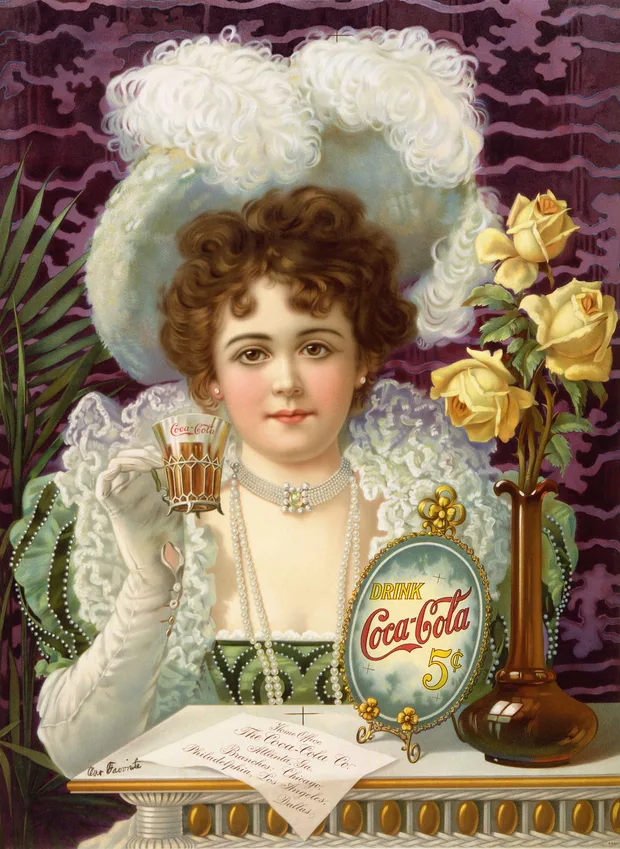
The highest figure often cited in this field belongs to a 1913 Coca-Cola die-cut cardboard festoon known as Girl on Hammock, a large multi-piece store display meant to drape above a soda fountain. It has been reported sold at around 80,000 dollars in 2011. That number is worth including, but it deserves a careful label, because the reporting around it does not cleanly name a single auction venue the way a house record would. Treat it as a reported figure rather than a documented hammer, which is exactly how a reference should carry a price it cannot fully trace.
The caution is not a knock on the object. Early cardboard festoons are fragile, elaborate, and scarce in complete condition, and it is entirely plausible for one to reach that level. The point is only that a reported figure and a house-verified figure are different kinds of evidence, and a careful survey does not quietly promote one into the other.
The signage records, cleanly documented
Where the documentation is firm is in the sign market, and Morphy Auctions is the house that has repeatedly set the pace. In its Soda Pop, Advertising and General Store auctions, Morphy has established Coca-Cola signage records with figures that are named and published. A tin-over-cardboard Drink Coca-Cola sign brought 14,400 dollars, and a Dutch-boy Coca-Cola gum sign, dated circa 1914 to 1916, reached 20,910 dollars.
Those two results came within a single Morphy sale that totaled around 2.4 million dollars across all its lots, which gives a sense of the scale these dedicated advertising auctions operate at. Because Morphy names the lots and the house, these are the figures a careful collector can lean on hardest, the documented backbone of the field rather than its most eye-catching rumor.
How to read a field without one clean record
Coca-Cola collecting rewards a habit that this whole publication returns to, which is separating a documented sale from a reported one and refusing to blur them. The festoon figure is the more dramatic number, and it may well be real, but the signage results are the more useful ones precisely because you can point to the house and the sale that produced them.
That is why this article ranks rather than crowns. Sources for these figures include Catawiki, Morphy Auctions, and Antique Trader, and reading them side by side is more honest than pretending one supreme Coca-Cola record exists when the evidence does not support a single clean claim. The same refusal to inflate a figure runs through the wider record sales guide.
Common questions
Is there one record-holding Coca-Cola collectible?
Not a single clean, venue-named one. The most dramatic figure is a 1913 Girl on Hammock festoon reported around 80,000 dollars in 2011, but that is a reported number rather than a cleanly documented hammer, so this article ranks several sales instead of crowning one.
What Coca-Cola sign prices are firmly documented?
Morphy Auctions has set Coca-Cola signage records with named lots, including a tin-over-cardboard Drink Coca-Cola sign at 14,400 dollars and a circa 1914 to 1916 Dutch-boy gum sign at 20,910 dollars, both within a Morphy sale totaling about 2.4 million dollars.